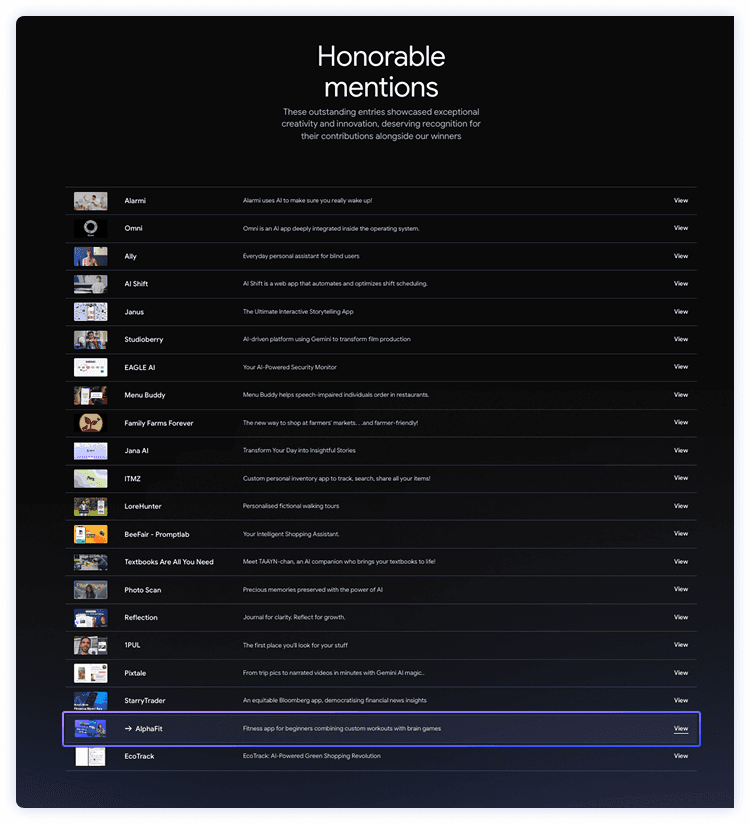
Top 30 Honourable mention out of 3,000+ submissions in Google's Gemini API Competition
Timeline
June - Sep 2024
Team
1 Engineer, 1 Designer (me)
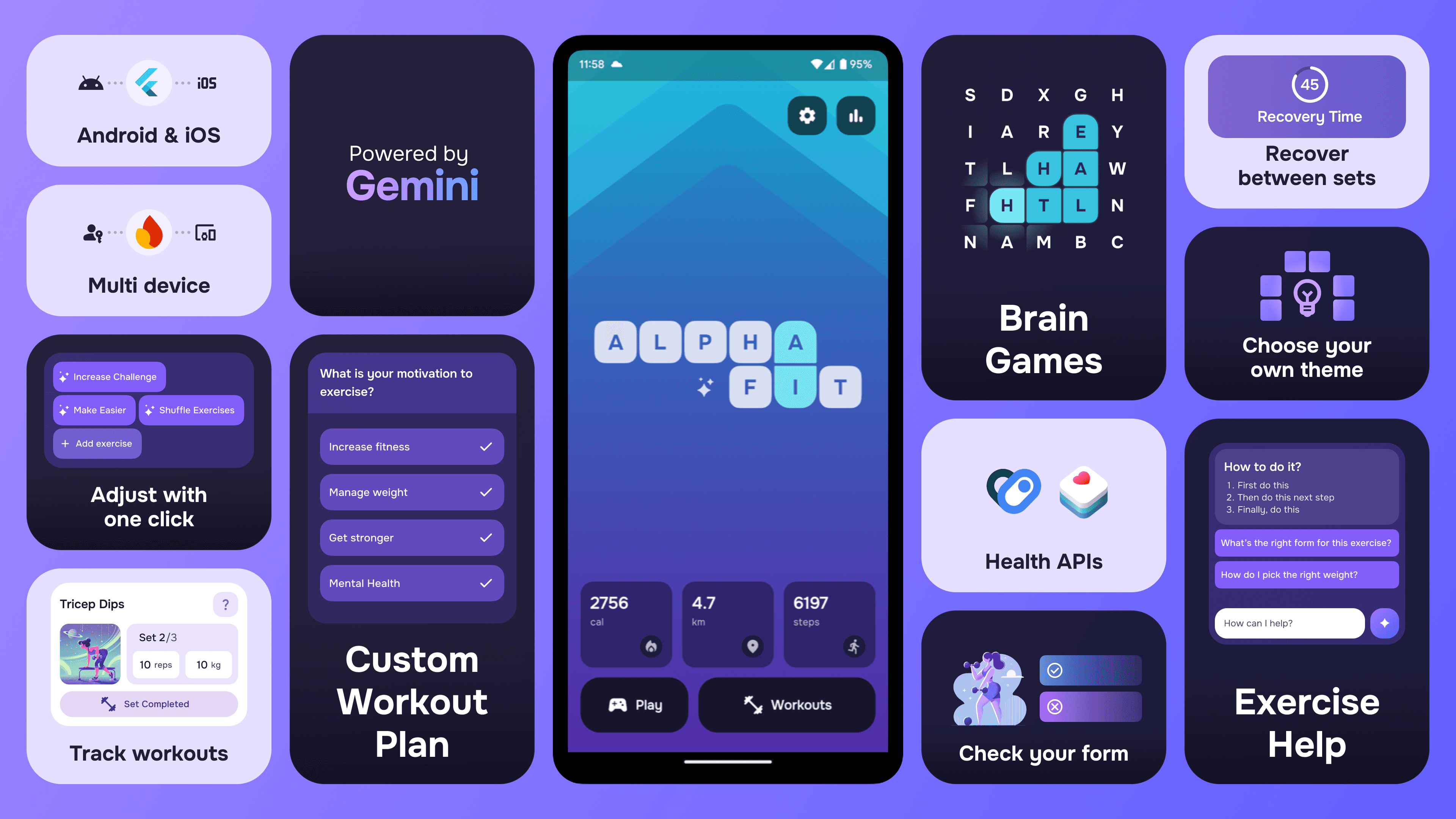
In a team of 2 (one designer, one developer) built an AI-powered fitness app that generates personalised workouts, checks your form, and makes you play word games between sets so you recover properly. I owned the entire design and product strategy.
The Problem
Fitness beginners face a paradox: they're motivated enough to start, but they don't know enough to sustain it. They don't know what exercises to do, in what order, at what weight, or for how long. They don't know how to perform a bicep curl correctly. And the thing that trips them up most? They don't know how to rest.
That sounds absurd, but it's real. Motivated beginners tend to overexercise, cutting recovery short because they feel good and want to push through. But skipping proper rest between sets is counterproductive. It doesn't build more muscle. It risks injury and burnout. And it kills the habit before it forms.
Every fitness app I looked at treated recovery the same way: a countdown timer and a blank screen. Dead time. The user's job was to stare at a number and wait. No wonder people either skipped rest entirely or picked up their phone and scrolled for five minutes.
Recovery time isn't dead time. It's a design opportunity.
What I did
Identified two problems hiding inside one: beginners don't just need a workout plan. They need a workout plan that protects them from their own enthusiasm. The recovery gap was the under-designed moment where habits broke down.
Proposed an AI-powered fitness app where recovery periods become active, engaging, and correctly timed. It used word games powered by Gemini to fill rest periods with something that's fun, cognitively light, and precisely timed to optimal muscle recovery.
Scoped the MVP for the Gemini API Competition. Working prototype, real AI integration, submission video. Two people, three months, everything from user research to branding to a shipped demo.
Designed the entire product and strategy end-to-end…
AI workout generation for zero friction entry
The starting point had to meet beginners where they were. AlphaFit app starts by asking about motivation, availability, existing fitness level, equipment access, and constraints, including disabilities and injuries. It was important to me to make this accessible from day one, not as an afterthought.
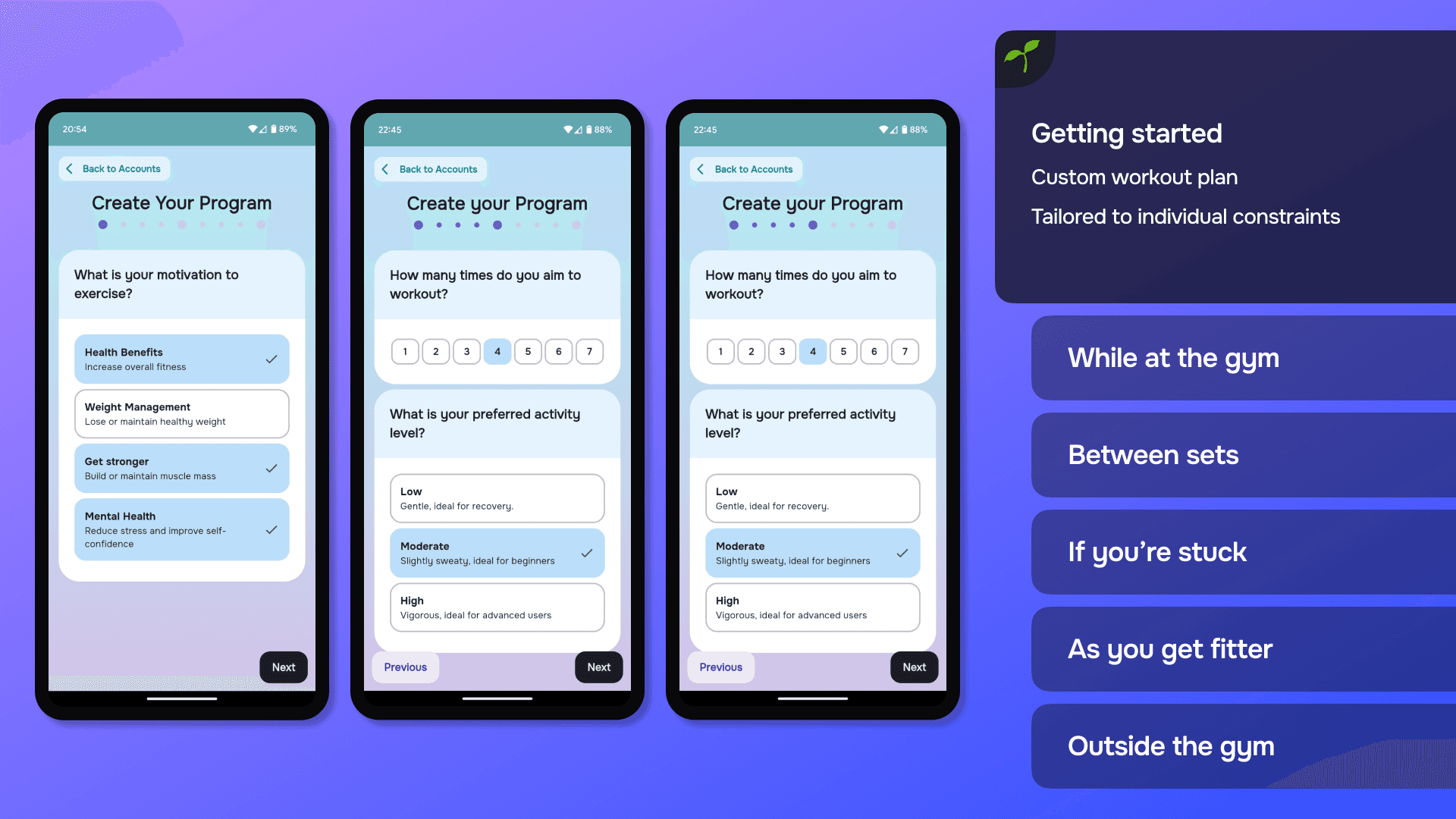
Gemini generates a gradually progressive plan: not just "here are some exercises" but a structured programme that adapts over time. If you only have dumbbells and a bench, the plan works with dumbbells and a bench.
Contextual AI helper
Beginners' biggest challenge isn't just finding a workout, it's then figuring out how to do it. The AI helper provides in-context exercise guidance: how to perform the movement, what muscles it targets, and form check support. No switching to YouTube. No guessing. The help is right there, in the moment you need it.
Waiting between sets is boring!
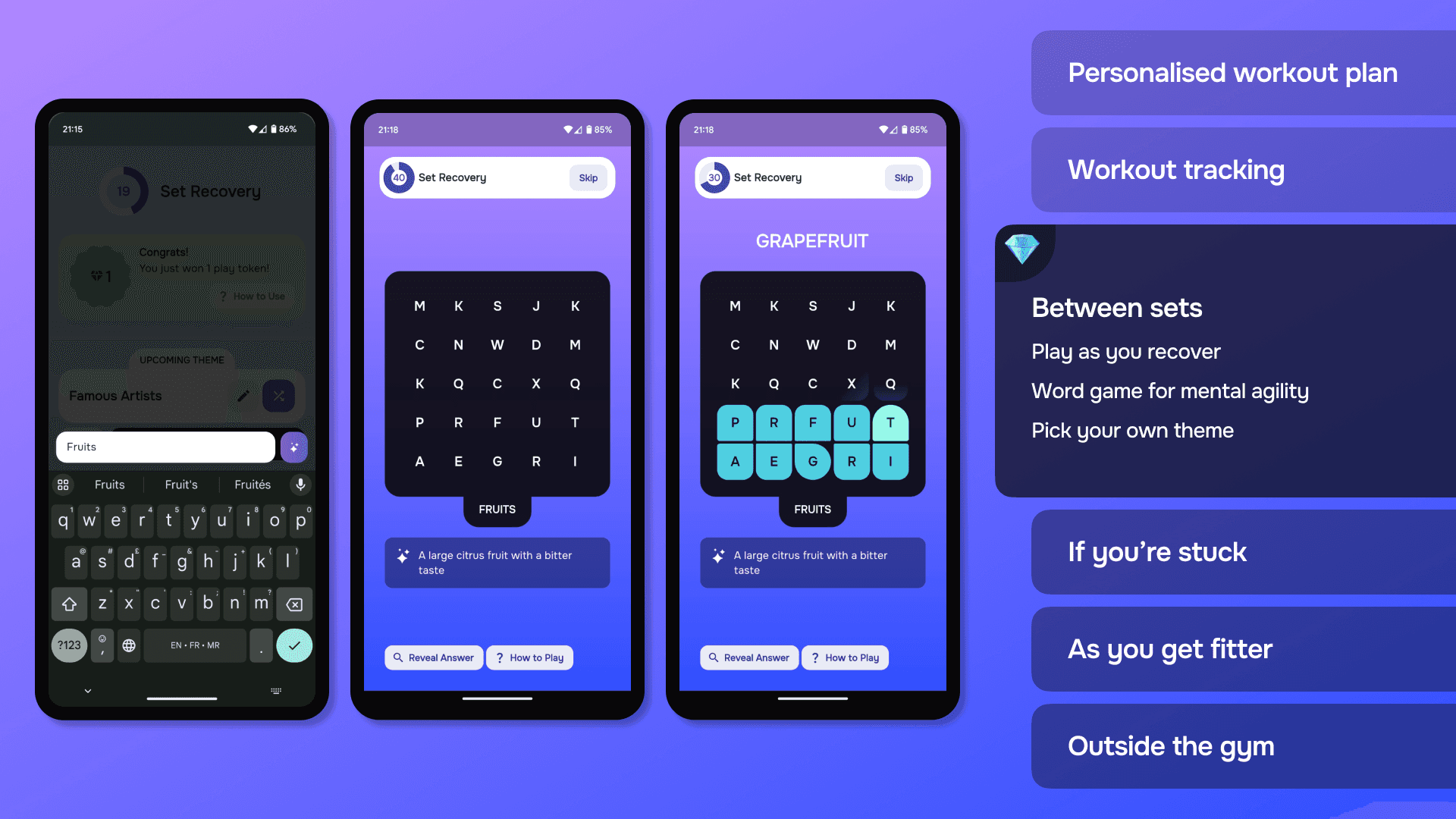
But it doesn't have to be. Between every set, instead of a countdown timer, you play a word game. The game is timed to the optimal recovery window, long enough for your muscles to recover, short enough that you don't cool down.
The honest version of this story: I originally designed interactive AI-powered storytelling for recovery periods. You'd unlock story chapters between sets, making choices that affected the narrative. It was ambitious, and exciting, aaaaand… and it didn't work. The AI sometimes got stuck in logical loops. The story sometimes took longer than the recovery window. The timing was unpredictable, which defeated the entire purpose.
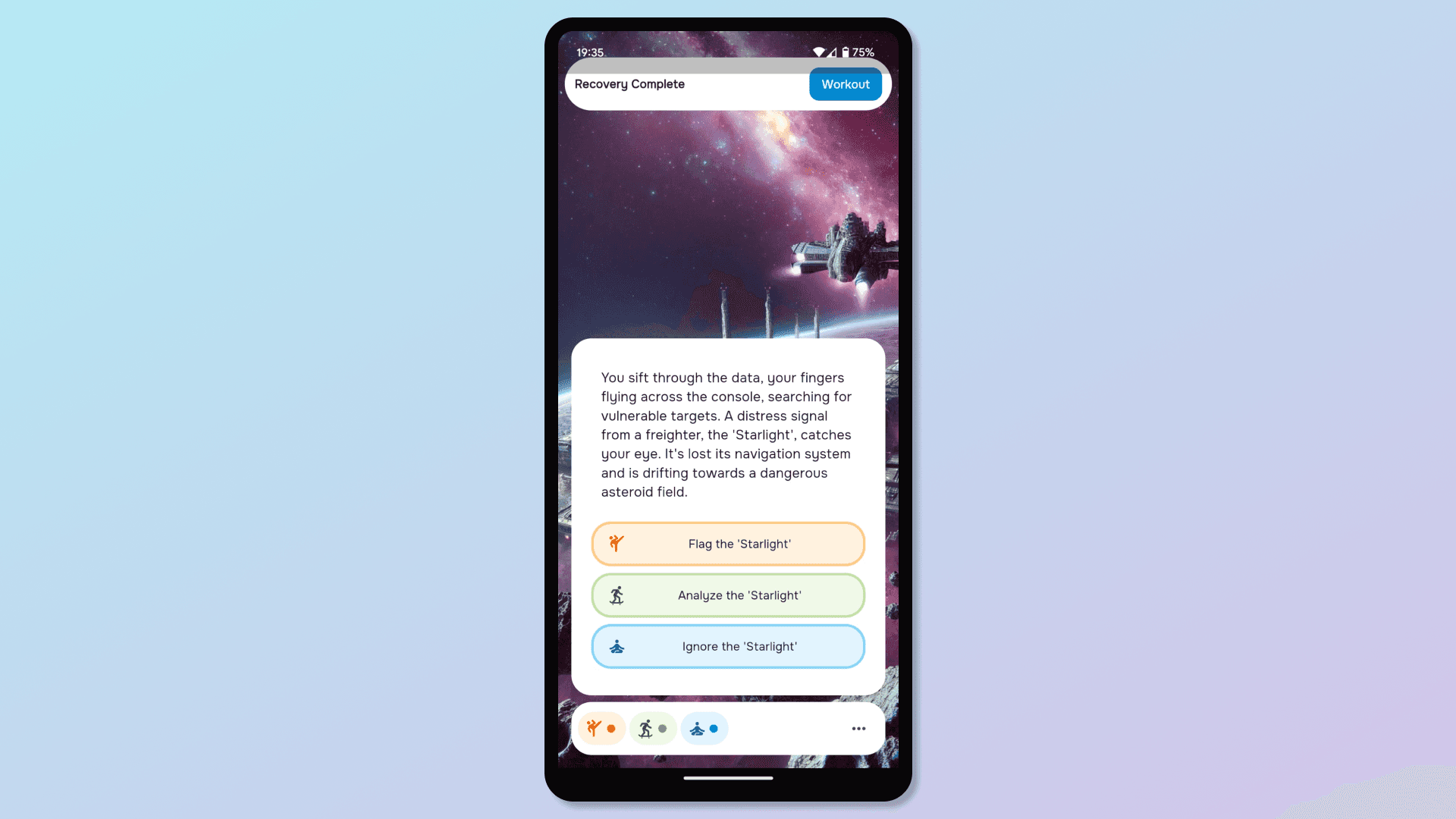
So I did the harder thing: I simplified. Word games with AI-powered thematic word identification and customisable difficulty gave us everything the stories promised engagement, delight, variable challenge — with predictable timing. The recovery period ends when it should, every time.
AI-powered workout modification
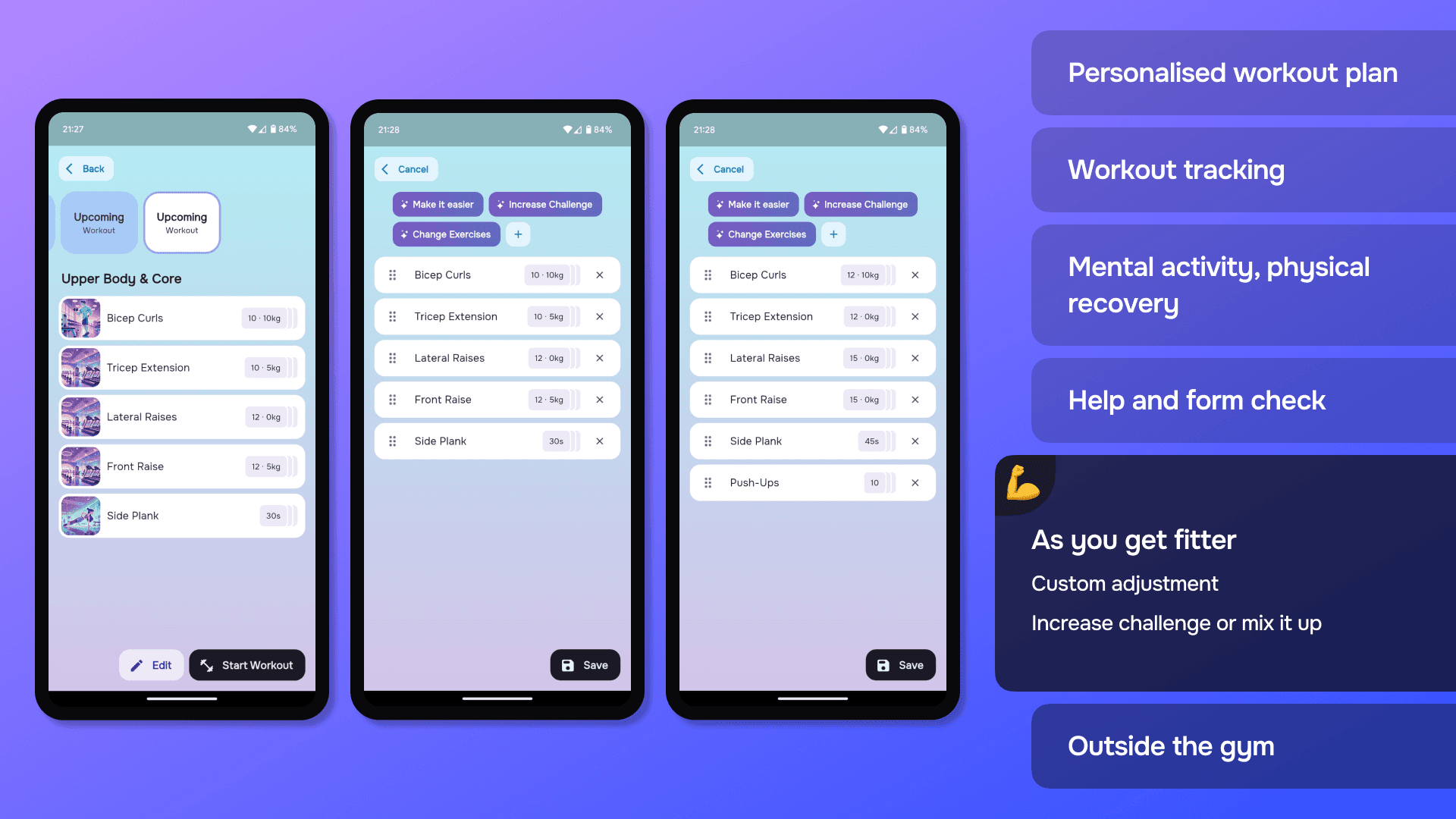
Once you start using the plan, the app needs to grow with you. So it was necessary to have a growth loop. Mid-workout, you can tell the AI to make it easier, increase the challenge, or swap exercises entirely. This completes the feedback cycle — the app learns what works for you and adjusts.
Health API integration
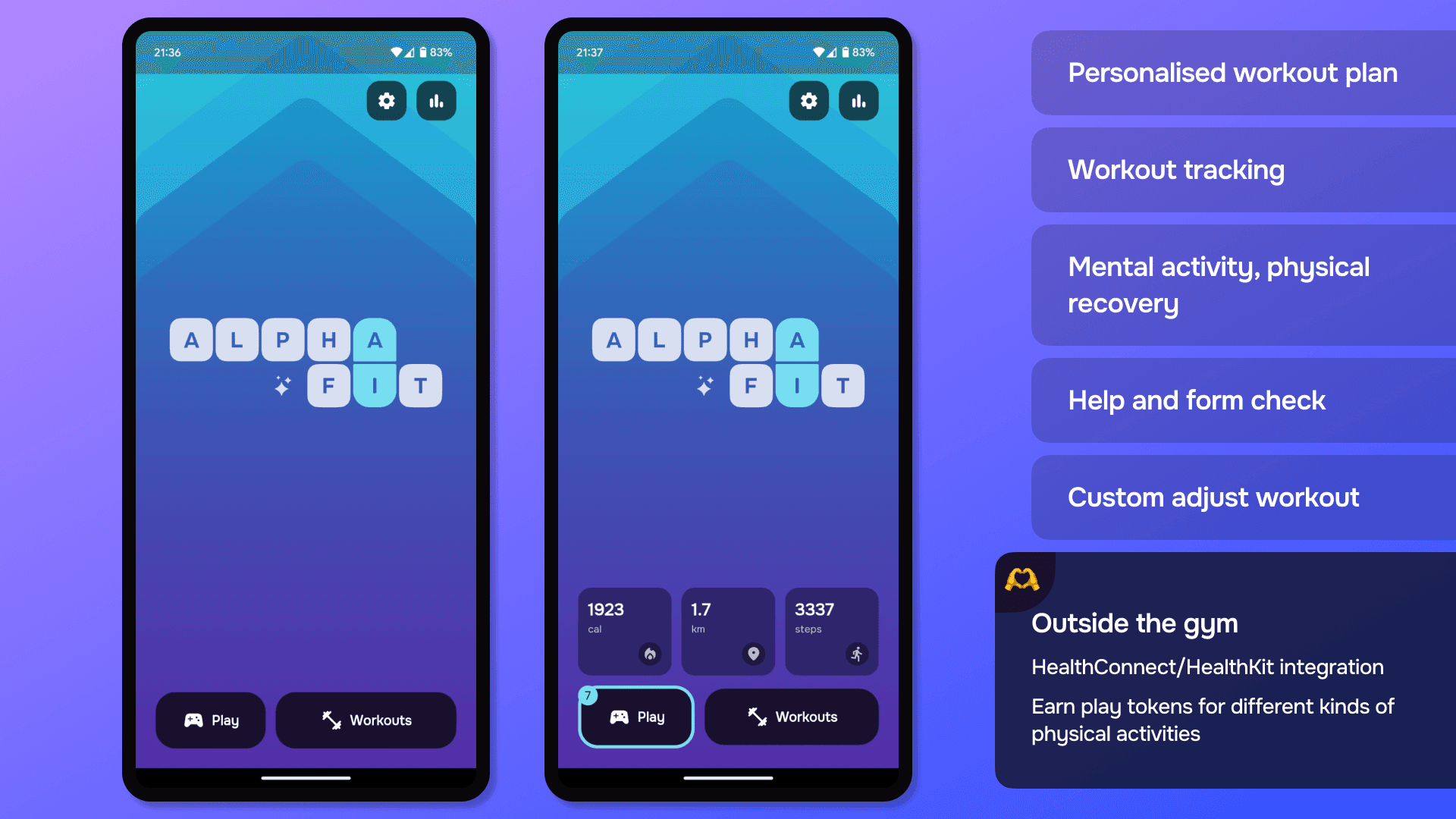
The vision beyond the competition: integrating with Health APIs so that real-life activity — walking, cycling, anything your phone or watch tracks — earns in-app rewards. Play Tokens earned through recovery games and real-world activity created a "fitness currency" that worked independent of device, dedicated sessions, or specific exercises in the app. Fitness becomes something you're always building, not just something that happens during a workout.
Design decisions that mattered
Accessibility from the start, not bolted on. The onboarding asks about disabilities and injuries alongside goals and equipment. This isn't a "special mode" — it's how the app works for everyone. Diverse needs aren't edge cases.
Simplify when the clever thing doesn't work. Interactive storytelling was a better pitch. Word games were a better product. Having the discipline to let go of the more exciting idea when it didn't deliver reliable timing was the single most important design decision in the project.
Recovery as a first-class design surface. Every fitness app treats rest as the absence of exercise. We treated it as a moment with its own purpose, its own UX, and its own delight. That reframe is the core insight.
Play Tokens over FAB points. The earlier design had a Force/Agility/Balance point system, which was flavourful but complex. Simplifying to Play Tokens made the reward loop clearer: do the work, play the game, earn the token, unlock the reward. One currency, not three.
The Outcome
Competition: Top 30 out of 3,000+ submissions in Google's Gemini API Competition
Prototype: Fully working app integrating Gemini API - not just a mockup, a real product
Technical validation: AI workout generation, exercise help, form check, and mid-workout modification all worked reliably
Key design learning: Interactive stories were more ambitious but less reliable → word games were the right call
Personal proof: I got significantly fitter over 6 months using the prototype myself — the product works because I used it every day
Why this matters for what I do next
This project was my entry point into thinking AI-first. Every core feature — plan generation, exercise guidance, form check, workout modification, game content — is powered by AI. And the most important design decision wasn't about the AI at all: it was recognising that recovery time is a design surface, not dead space.
The combination of understanding what AI can do, and identifying real design opportunity is what I want to bring to whatever I work on next.